


The Shrinking Ownership of Law Practice Management Technology (Part 1 of 4): A Market Dominated by Just Six Ownership Groups

Sixteen years ago marked the beginning of a sea change in law practice management technology for solo and small law firms. On March 1, 2008, a virtually unknown company out of Canada called Themis Solutions launched the first cloud-based software product for managing a law practice, called Clio. Coincidentally, just a week earlier, another company, Rocket Matter, announced the beta version of its cloud practice management platform, and on Jan. 6, 2009, it brought the commercial version of its platform to the market.
Although neither of these software products were the first for managing law practices, they were the first to be based in the cloud, as opposed to on premises, and that distinction turned the tide in legal technology. By eliminating the need for expensive and maintenance-heavy on-premises servers, by eliminating the need for tedious and disruptive installations and updates, and by eliminating the need for complex and costly licensing agreements, cloud software made it easy and affordable for lawyers to adopt practice management software — particularly lawyers in solo and smaller firms.
Read Part 2 of this series now.
While it would be an exaggeration to suggest that lawyers immediately swarmed to the cloud, savvy entrepreneurs were quick to forecast cloudy days ahead for legal practice. In relatively short order, a string of cloud-based practice management products came to market, among them MyCase in 2010, LexisNexis Firm Manager in 2011, Smokeball in 2011, CosmoLex in 2013, Thomson Reuters Firm Central in 2013, PracticePanther in 2014, and Zola Suite in 2015, to name just a few.
As more and more cloud practice management platforms came to market and competition heated up among them, lawyers were the beneficiaries. Platforms competed for their business on price and on features, providing practitioners with a wide array of purchasing options.
But over the last six years, an accelerating number of acquisitions has reshaped this robust marketplace of competing products to one of greater consolidation. We are now at a point when virtually all of the companies that were once independent competitors in the solo and small-firm market are now owned by just six primary investment or ownership groups.
And with that, there is both good news and bad for consumers.
The good news is that common ownership under a single umbrella means more money and resources for previously independent companies to develop new features and capabilities. It can also equip these companies with the means to provide stronger customer support and training.
The bad new is that consolidation reduces competition and could lead to higher prices for lawyers. (However, as I will discuss in Part 3, competition in this market appears to remain robust.) It can also mean that the parent company pours more resources into certain products while de-emphasizing others.
Notably, despite this surge of acquisitions, many legal professional are unaware of them or even of who the ultimate owner is of the practice management software they use.
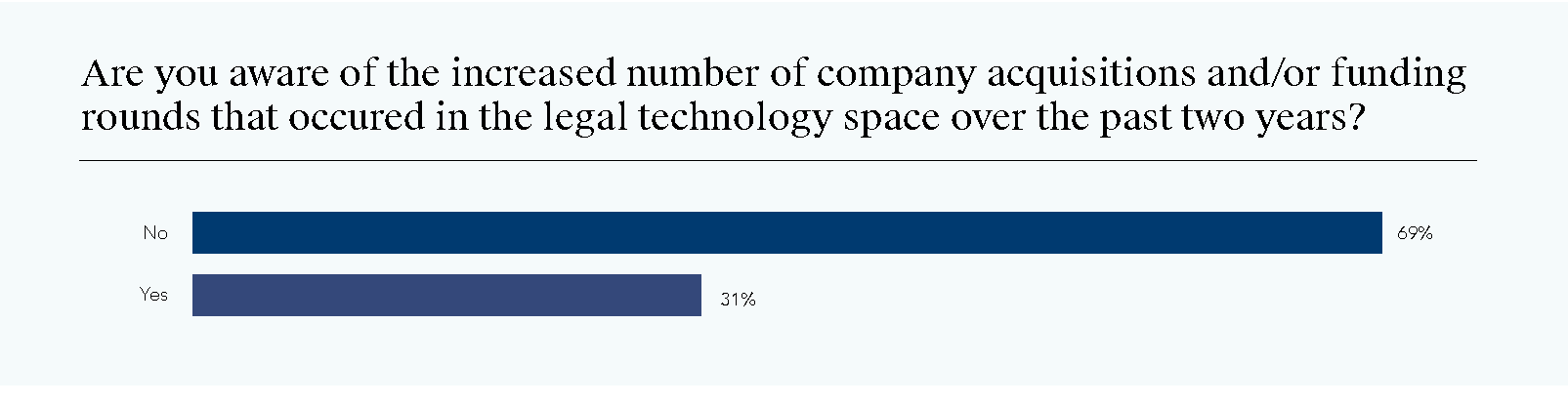
In the Legal Industry Report published in 2022 by LawPay and MyCase, lawyers were asked, “Are you aware of the increased number of company acquisitions and/or funding rounds that occurred in the legal technology space over the past two years?” Just 31% answered yes.
Why does it matter to know who owns the software you use? Well, lots of reasons, but high among them is that it is a lawyer’s ethical responsibility. Any number of ethics opinions regarding lawyers’ use of cloud technology have said lawyers have a duty to vet the providers of the technology, including their terms of service, their policies with regard to data access and data portability, their security, and their overall reputation.
Given this rapid pace of consolidation and how difficult it has made it to tell all the players without a scorecard, I thought I’d create a scorecard, of sorts. Over the course of four posts, I will detail who owns what and discuss what this consolidated ownership means for the market. Specifically, I will cover:
Watch for Part 2 tomorrow.
Reach Out
Don’t hesitate to reach out to us to discuss your specific needs. Our team is ready and eager to provide you with tailored solutions that align with your firm’s goals and enhance your digital marketing efforts. We look forward to helping you grow your law practice online.
Our Services:
Blog Post Writing
We do well-researched, timely, and engaging blog posts that resonate with your clientele, positioning you as a thought leader in your domain. Content Writing: Beyond blogs, we delve into comprehensive content pieces like eBooks, whitepapers, and case studies, tailored to showcase your expertise.
Website Content Writing
First impressions matter. Our content ensures your website reflects the professionalism, dedication, and expertise you bring to the table.
Social Media Management
In today’s interconnected world, your online presence extends to social platforms. We help you navigate this terrain, ensuring your voice is consistently represented and heard.
WordPress Website Maintenance
Your digital office should be as polished and functional as your physical one. We ensure your WordPress site remains updated, secure, and user-friendly.
For more information, ad placements in our attorney blog network, article requests, social media management, or listings on our top 10 attorney sites, reach out to us at seoattorneyservices@gmail.com.
Warm regards,
The Personal Injury Attorney Costa Mesa Team
AD SPACE FOR RENT
Source link